
AI is already part of my everyday life
At the end of 2022, I first saw ChatGPT in a video on TikTok and tried it immediately. It was able to explain Contents to me faster than my teachers, solve tasks better than if I did them myself, and even develop ideas I would never have come up with. That really fascinated me.
But it wasn't until I started my apprenticeship that I realized just how powerful and important AI really is. Today, I use it daily. Not to do my work for me, but to teach myself new things, research more effectively, and work more efficiently on certain tasks.
My apprenticeship is diverse. That's exactly what makes it exciting
I'm completing an apprenticeship as a Digital Business Developer EFZ. I'm currently in my second year. After the first year at Bbc Basislehrjahr, I've been working at Liip since summer 2025.
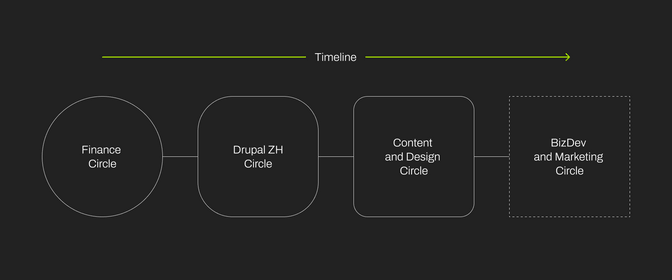
What I find particularly exciting about this apprenticeship is that I have many different tasks. I work in various Circles, self-organized teams based on holacracy. This way, I get to know many different perspectives, tasks, and people.
I started in the Finance Circle, which focused more on data management. Since then, I've had the opportunity to look into various other teams and get to know different tasks, perspectives, and ways of working. Today, I work in the Content and Design Circle with a focus on process optimization, automation, and AI. I'll also get to know several other Circles, tasks, and roles throughout my apprenticeship.
This variety suits me well. I like working in a structured way, communicate actively, and find it exciting to analyze and improve workflows. At Liip, I have the privileged opportunity to take on responsibility early in my apprenticeship. I work on impactful internal and external projects, make decisions, and contribute my own ideas. For me, this strongly distinguishes Liip from many other employers offering apprenticeships.
Dealing with clients is part of it
One part of my apprenticeship that might be less visible from the outside is dealing with clients. I learn to communicate professionally, represent my own company well, and understand important factors for good collaboration. This means, for example, clearly communicating information within the team, gathering requirements, and communicating in a structured way in projects. Because I participate in real projects early on as an apprentice, I develop a good sense of what really matters to clients.
How I use AI specifically
AI becomes particularly helpful when I provide a lot of context. Then, a general tool becomes a valuable sparring partner. AI supports me especially when I have a clear goal and need a good first draft quickly. I use it for brainstorming, to understand new terms, for research, or to structure texts.
- Fun fact on the side: This blog post was also partially structured with AI. I gathered my thoughts, explained the context, and then got help creating a meaningful structure. This is how I use AI in everyday life.
A good example is the manual for the LiipGPT backend that I wrote. At the beginning, I had practically no experience writing manuals. So I first taught myself the basics with the help of AI. Then I gave the AI as much context as possible and developed a draft step by step with it. In the end, a handbook was created that is often used internally and individually expanded for clients. For me, this was a moment when I realized how much added value AI can bring, because I could not only work faster and without experience, but also create a result that really helps others in their everyday work.
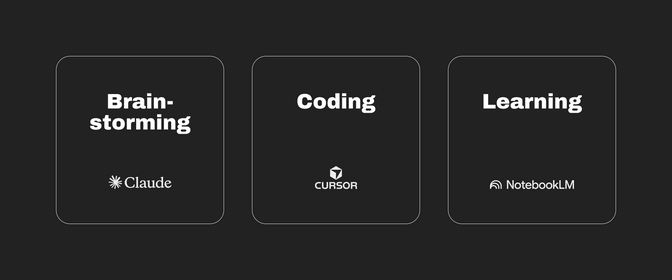
I don't use these tools thoughtlessly. I test them, compare them, and carefully consider which use cases they really make sense for.
AI is my best learning buddy
AI has great potential for learning. It simplifies content, provides examples, and adapts to my level. No textbook can do that. Getting started with a topic becomes faster this way. As an apprentice, I ask the AI questions and follow-up questions that I wouldn't dare to ask in class.
At the same time, however: AI must never replace your own thinking. Those who don't understand how AI works and how it can be used will end up learning very little.
For me, openness and critical questioning are part of dealing with new tools. AI can empower learners, but only if it's consciously used as a tool. That's why it's important for apprentices to engage with AI during their apprenticeship. Not later, when everyone else has long been a routine user.
How do you use AI?
Perhaps it's worth pausing briefly after this Blogpost and thinking about your own use of AI. How do you really use AI in your everyday life today? What concrete added value does it bring you? Is it just a tool you try out occasionally? Or do you use it consciously to work better, faster, or more structured?
At Liip, I directly experience how an organization doesn't just use AI, but actively shapes it:
- Regular knowledge exchanges and Liip Talks about AI, from new models to ethical questions.
- AI training for all employees. Internally, we offer workshops and special modules so everyone stays confident in using AI.
- Development and further development of our own AI tools like LiipGPT, which is already in use with clients from healthcare, legal, and public sectors.
- AI Sustainability Guidelines, an internal framework that ensures AI projects are implemented ethically and sustainably.
This shows me what an organization can look like that doesn't blindly deploy AI, but takes responsibility for it.
How do employees in your company use AI? Are there clear rules or offerings to use AI meaningfully? Where could AI specifically support you in your role if you used it more deliberately?
AI is not a fixed concept that works the same for everyone. But those who use it early quickly realize: The question is not whether you still need an apprenticeship, but how much more you get out of it when you have AI.