
The Canton of Graubünden is developing a new website. The current structure is based on the administrative organization and includes several tens of thousands of pages. The existing site no longer meets today’s requirements for usability or the changed user behavior.
At the heart of the relaunch is user centricity. Instead of an internal, administration-driven perspective, a topic-centered structure is being created—similar to what the Canton of Basel-Stadt has already successfully established (more about the project in this blogpost).
From a content perspective, the initiative? A mammoth project.
What does a content project of this scale require?
Organically grown content cannot simply be migrated. A relaunch is usually the moment when content is not only transferred, but rethought in terms of quality.
Because a large volume of content needs to be revised, a decentralized editorial model is required. Numerous employees—often without in-depth content experience—are involved. Good processes, clear roles, and targeted support are therefore essential:
- A decisive project lead
- A solid inventory and assessment
- Concept and strategy
- Governance (processes & responsibilities)
- Set-up and training of the web editorial team
- Operational content production
- Quality assurance
Liip is accompanying the Canton of Graubünden on this journey. Based on our experience from projects in Basel-Stadt, Solothurn, and various federal offices, a trusting and efficient collaboration has developed.
How we work together
Two content strategists from Liip work closely with the canton’s project management. The project team contributes internal know-how and decision-making power, while Liip adds operational capacity and extensive experience from similar setups. This arrangement enables high speed—and a clean integration of internal knowledge and external input.
The collaboration spans already more than 1.5 years.
What are Liip's deliverables?
- Content audit
- Content strategy & tone of voice
- Content governance & editorial model (for the project phase and for ongoing operations)
- Content lifecycle model
- Content guidelines for the editorial teams
- Page types & sample texts (in collaboration with the design team)
- Word templates for content creation
- Training & support for editorial members
- AI-based writing tool “GR Editor” (based on TextMate)
- Quality assurance
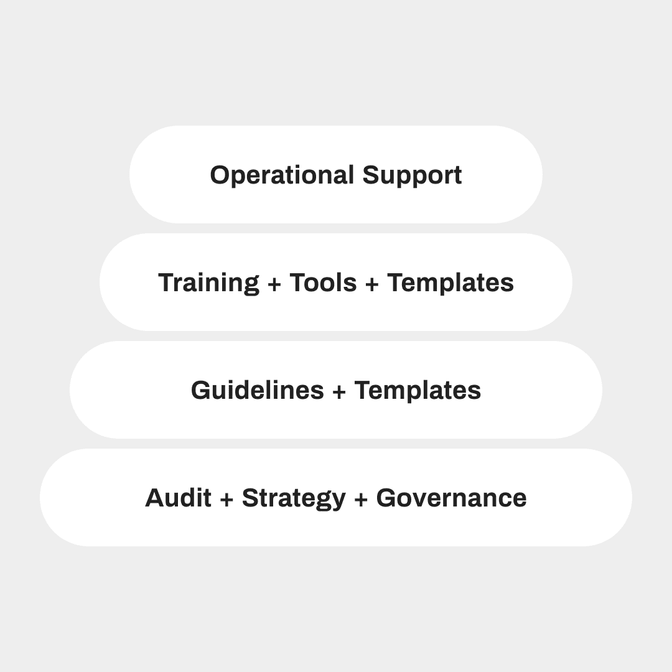
What does this mean in detail? From audit to quality assurance
A relaunch involving more than 120 editors and thousands of pages of content needs one thing above all else: a clear implementation plan and thorough preparation. Each step builds on the previous one.
-
Content audit – creating clarity
We started the project by analyzing a representative selection of existing content. The audit helped identify optimization potential and formed the foundation for all subsequent decisions. -
The editorial model – roles, responsibilities, and processes
Content governance and the editorial model we developed created the basic ideas for our work with the web editorial teams. We made a model for the project phase. We also added a plan for after the relaunch. -
Content strategy & tone of voice – the guiding framework
Governance regulates collaboration and processes; the content strategy defines the editorial direction. It is aimed less at editors and more at providing the conceptual and content foundation for operational elements. The strategy was complemented by two distinct tones of voice for the new website. With the strategy completed, the operational phase began. -
Page types & sample texts – making the concept tangible
Together with the design team, we developed the new page types. Our UX writer created initial realistic content that served as references for finalizing the page types. Working with real text is crucial: only this way can structure, content, and design be meaningfully aligned. -
Content guidelines – the handbook for editors
Derived from the content strategy, the content guidelines bundle rules, recommendations, examples, and concrete instructions—for clear, accessible, and consistent content. -
Word templates – because the CMS is being developed in parallel
Since CMS development and content creation run in parallel, texts need to be created outside the CMS. For this purpose, we created Word templates that: reflect the new page structure, integrate all relevant meta information, include guidance for editors. The Word templates were supplemented with visualizations of the individual page types. For each page type, a real text example was set up in Figma and shared with editors as a PDF. -
AI writing tool “GR Editor” – real-time support
A decentralized editorial model inevitably leads to varying text quality. The GR Editor (based on TextMate) counteracts this by checking clarity, consistency, and tone of voice directly while writing.
The canton had ideal prerequisites: existing cantonal writing guidelines, the new content guidelines, and the two defined tones of voice. -
Building the editorial teams & training
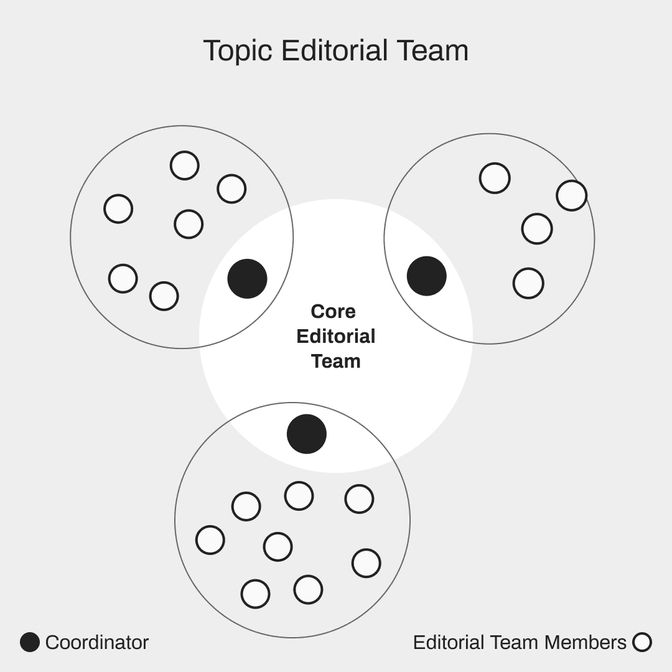
First, the editorial teams were assembled to match the new website structure: a topic section and an organizational section. For the topic section, topic-based editorial teams were created, each with a coordinator. They act as an interface between the teams and the project management. The support organization (project management + Liip) accompanies the teams. The training sessions were the first practical entry point. The new page types, guidelines, and the GR Editor were introduced.
-
Editorial support – day-to-day guidance
Content work is currently ongoing. The support organization hosts regular editorial meetings, answers questions, and develops solutions. Each topic team receives individual sparring on their first texts. -
Quality assurance – before content goes live
With this volume of content, personal responsibility is key. Editors receive checklists to review their own texts. Strategically selected content receives specific feedback. The GR Editor also makes a significant contribution to quality assurance.
Initial learnings from the project
A relaunch of this size stretches everyone involved. A decentralized editorial model is unavoidable. Understanding the situation of editorial team members, flexibility in implementing the plan, and pragmatic solutions along the way are essential ingredients for constructive collaboration.
What does this mean in concrete terms? A few examples:
- “Tone makes the music”: treating each other with respect, addressing open points, taking problems seriously, and allowing co-creation.
- Giving editorial teams leeway in scheduling—within the overarching project timeline.
- Using tools flexibly (e.g., Excel instead of Miro if it works better).
Working with real text examples during the development of page types has clearly proven to be a crucial decision. With so many stakeholders, mature templates and distinct references are essential to ensure quality, consistency, and speed. The visualizations of the page types also play a central role. For people who think strongly in visual terms, writing in Word templates without a frontend preview is challenging. The visualizations at least serve as a general reference.
External experts can help smooth peak workloads and contribute an outside perspective to discussions. Beyond that, it is rewarding to see a shared team emerge across organizational boundaries—working together for the common goal.
…and in exactly this spirit, we are looking forward to the next, final process steps—and to an exciting year for the relaunch 🙂